Practice in Private. Publish in Public.
“Most PM judgment never gets graded. Conrad forces a prediction, a confidence number, and a real resolution date - so being wrong is data, not a vibe.”
A private tool - the product and security reasoning behind it, including what’s working and what isn’t yet.
The feedback loop problem
Most product decisions never get resolved in any way you can learn from.
One brain, two jobs
The same memory core feeds a private judgment practice and a public content engine - neither is a copy of the other's data.
Neither side is a copy of the other’s data - both read from the same memory, so a pattern learned practicing a real decision privately and a pattern learned about my own writing voice both come from one place, not two drifting ones.
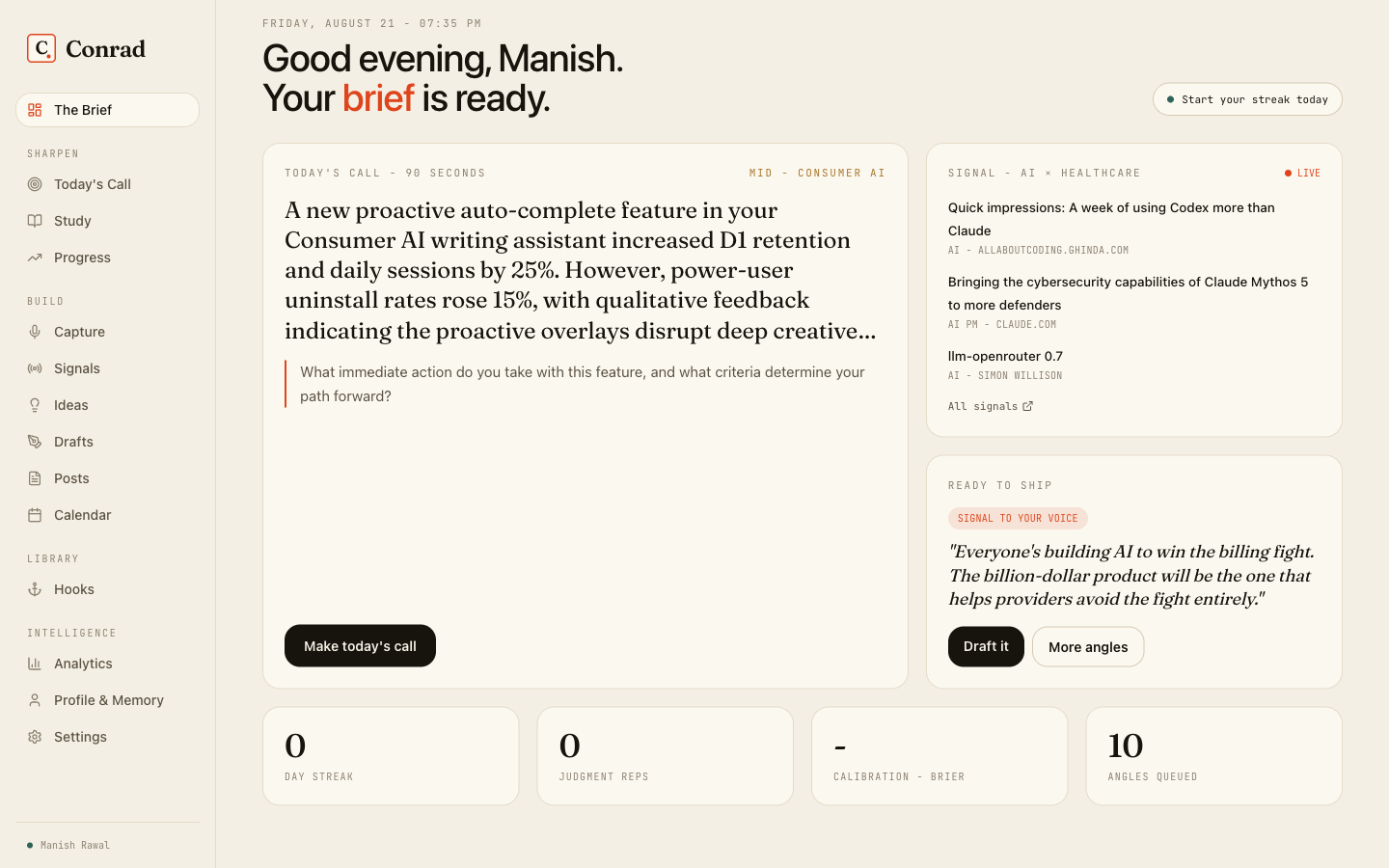
Both halves on one screen - Today's Call for judgment practice, a live signal feeding the content engine. The 0s here are real, not staged - see Section 03.
How judgment gets graded
Not a diary. A forecasting exercise, applied to real decisions.
Honest state of this half: the scoring pipeline is real and correct - six cases loaded, calibration math verified - but I haven’t logged a real decision through it yet. Built before it was a habit, not the other way around.
When the writing went quiet, then stale
The content half went about five weeks without a post. Restarting it meant first working out why the writing had gotten predictable enough to stop wanting to publish it.
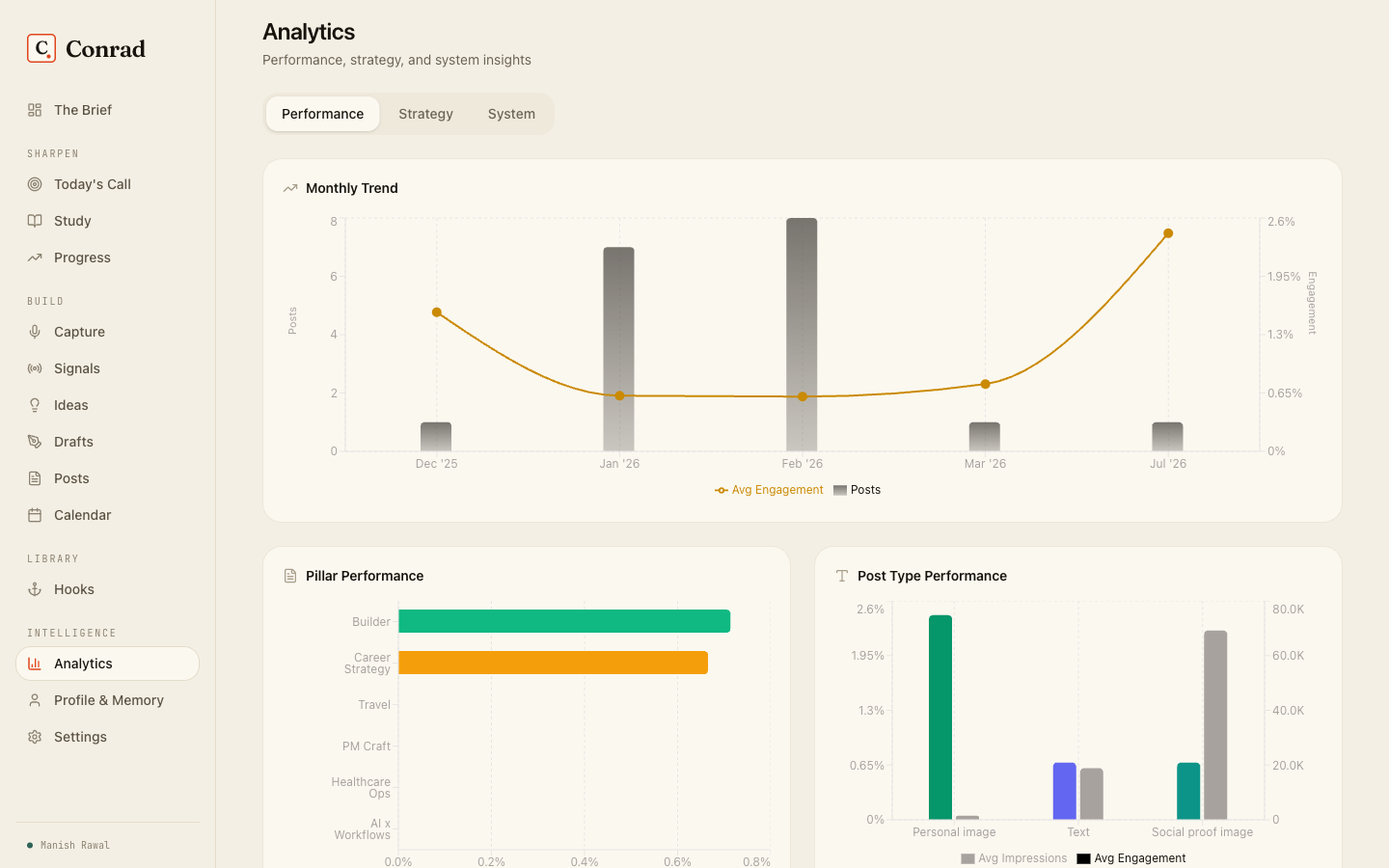
The actual trend line - notice the gap before the last bar. That's the five weeks this section is about.
How much autonomy to give the AI writer
Replacing a single prompt with an agent that can check its own facts before writing - the trust boundary I drew, not the plumbing underneath it.
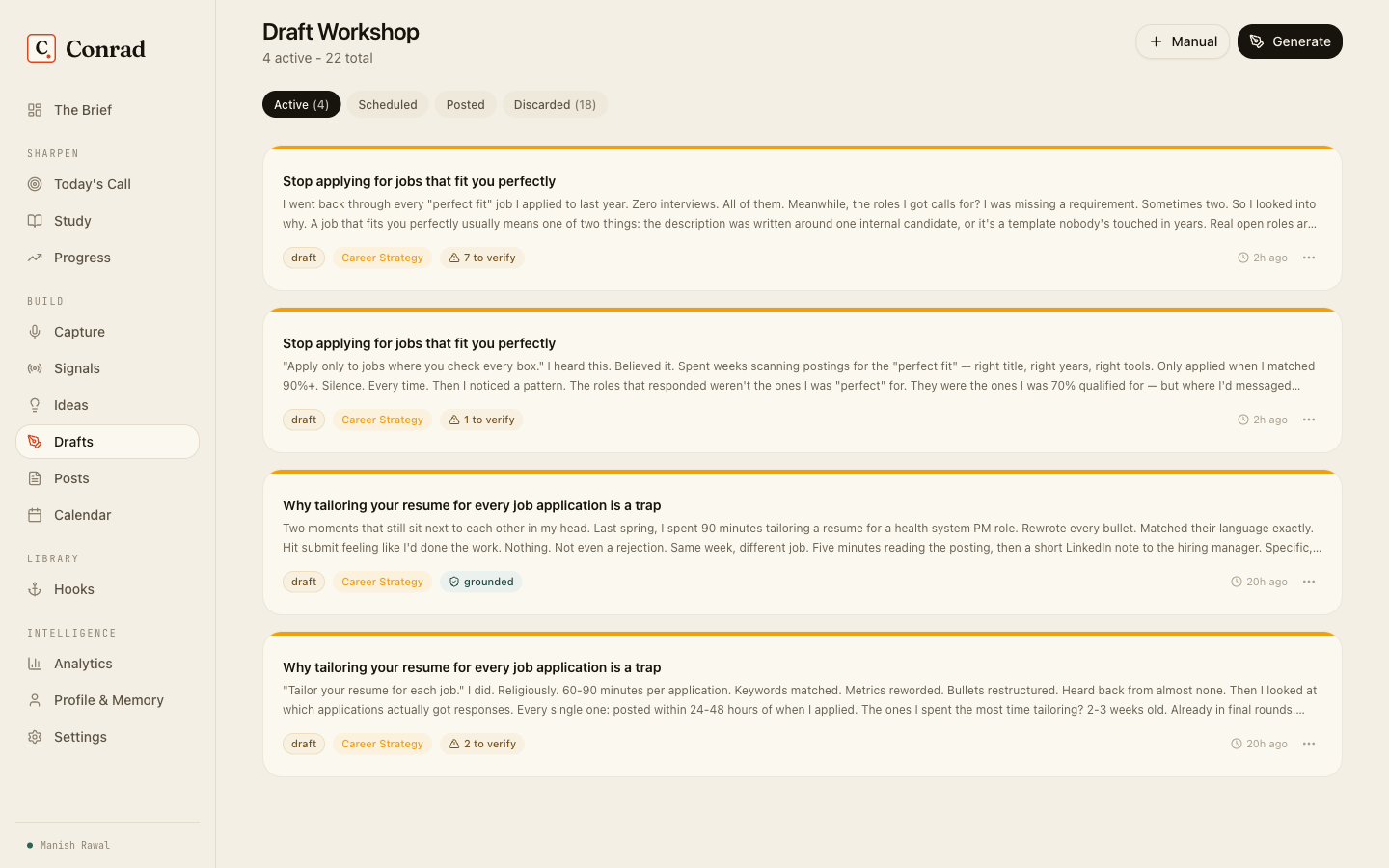
This is “can look things up, not act” in practice - drafts come back with claims flagged to verify, never auto-published.
What I found when I checked my own work
Before rolling this out further, I had it reviewed like a production system, not a side project.
The review found a real gap: one of the safety settings I believed was fully applied wasn’t - the process had more system access than I’d designed for. Low real-world risk, since it still couldn’t touch files or run anything, but a claim the whole design leaned on turned out to be only half true. Fixed before it became load-bearing for anything else. The actual lesson wasn’t about this one setting - it’s that a private, one-person project doesn’t get to skip the review a shared product would get, just because no one else is watching.
Why this stays private
A deliberate choice, not a gap.
Conrad runs against real business content, real credentials, and my own real decision practice - the same reasons RoleRadar and Safar are public are exactly why this one isn’t. This case study is the entire public surface of it: the real product decisions, not a demo account or a sanitized clone.
Let's talk about
how you think about product decisions.
If calibrated judgment and product decisions made under real uncertainty are things you care about too, I'd love to talk.